Gaming news
Idle games, incremental games, clicker games: what is the difference?

Contents · 8
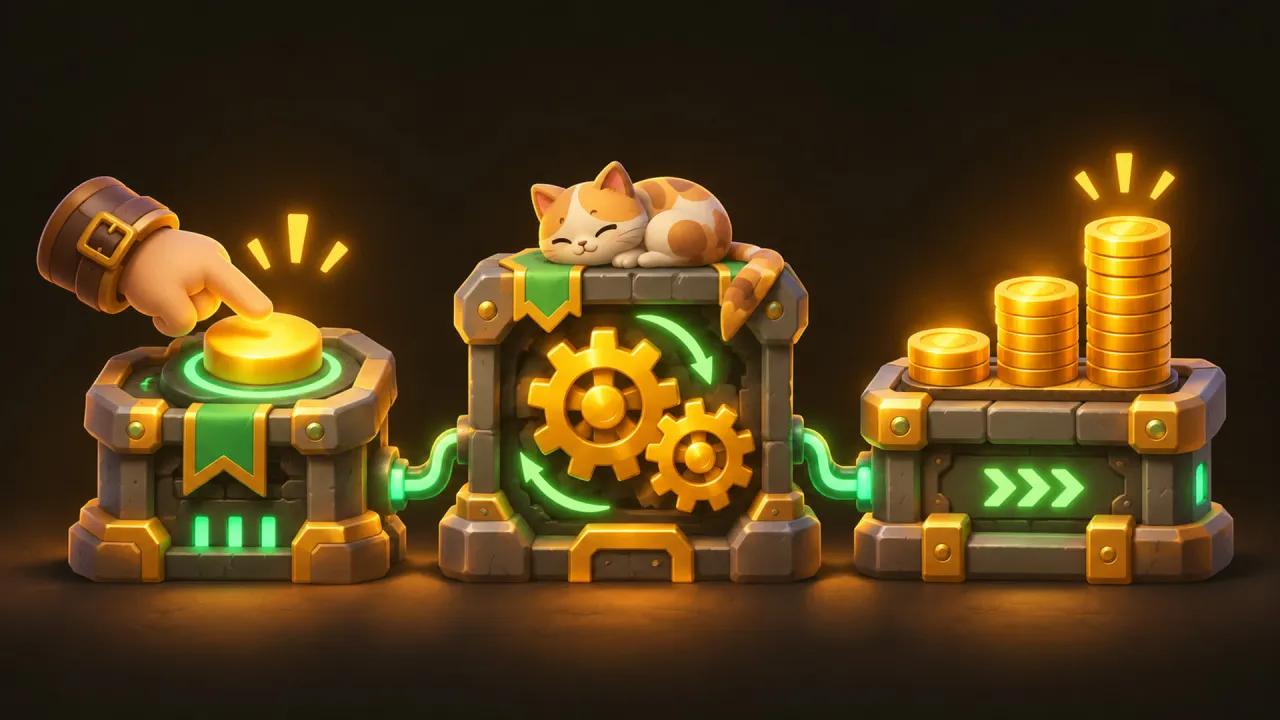
Idle games, incremental games, and clicker games are three labels for one family, and each label describes something different. Clicker says how you play: you click or tap, a lot. Idle says what happens when you stop: the game keeps going. Incremental says what the game is about: an economy of growing numbers that you automate step by step. Most games in the family earn two or all three labels, which is why stores and players mix them freely.
Why the labels overlap
The confusion is real enough that researchers have studied it. For a 2018 paper presented at the CHI conference, a team examined 66 idle games and found that even experts disagree. One academic uses idle and incremental as synonyms. An industry research firm says idle and clicker for the same games, but never incremental.
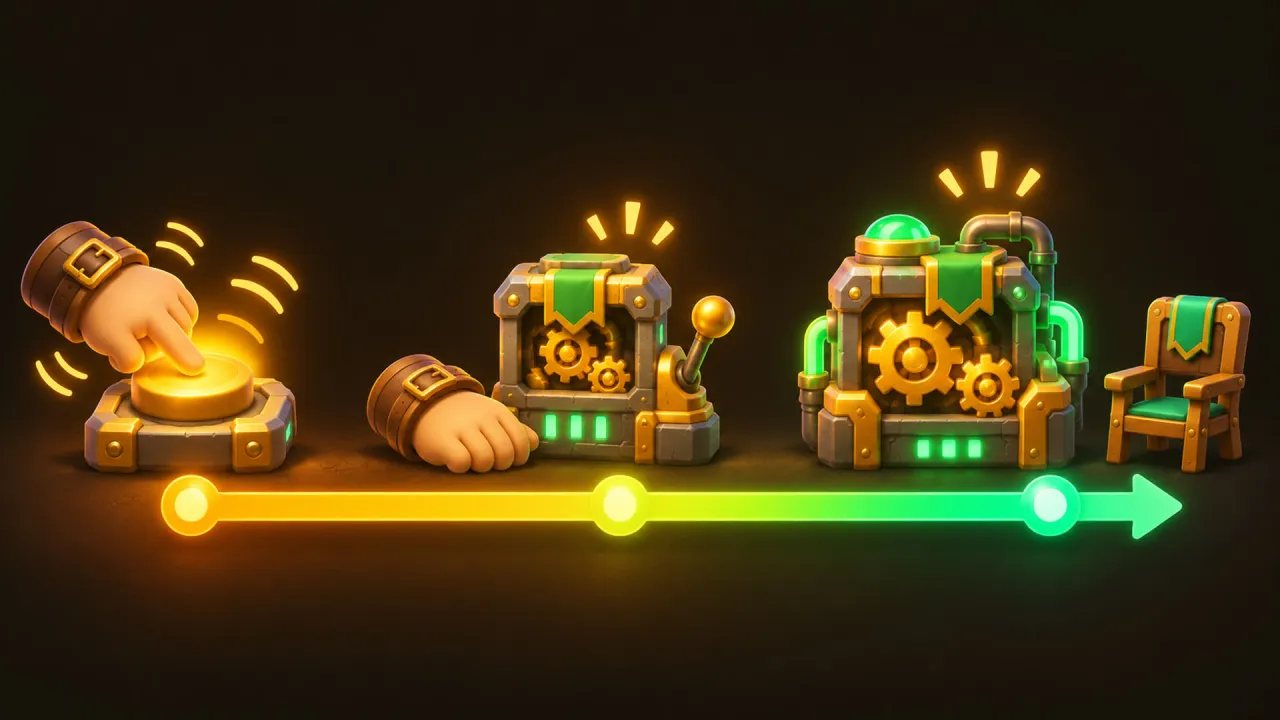
Their proposal is the clearest map available. Idle game is the umbrella term. Incremental games are a group inside it. Clicker is not a separate box at all, but one end of a scale that measures how much the game asks your hands to do.
Idle games: the game moves without you
The study's definition is short: an idle game can make progress for a while without any input from the player. It also lists what these games share: most of the play happens in the background, waiting counts as playing, you can leave and return with little or no penalty, and there is no game over.
The purest example is Progress Quest from 2002. You create a character, and from then on the game plays itself. Researchers call this a zero-player game.
Incremental games: an economy you automate
In the study's definition, an incremental game is an idle game in which you pick a resource to produce, wait for it to pile up, and spend it to automate more of the production. Cookie Clicker from 2013 is the textbook case. One click bakes one cookie, and cookies buy characters and buildings that bake for you.
What makes these games feel incremental is the math underneath. Anthony Pecorella of the game platform Kongregate lays out a typical design in The Math of Idle Games: each purchase costs a fixed percentage more than the last, so costs grow exponentially while your production grows more slowly. You are always a little short, and always one purchase away from the next jump.
Some incremental games go far beyond one resource. Kittens Game, a text-based browser game from 2014, belongs to a type the study calls micromanagement games: many resources, many decisions, slow progress. Its own tagline jokingly compares it to a famously hard action game.
Clicker games: your finger is the engine
In a clicker, clicking or tapping is the core action: each click deals damage or produces a resource. The best-known early example is Cow Clicker, a 2010 Facebook game by Ian Bogost. You got a cow, you clicked it, and then you waited six hours to click again. Bogost built it to boil the social games of the time down to their essence, partly as satire. According to the study, it became a hit anyway.
Clicker Heroes from 2014 shows how clicking and idling mix. You start by clicking monsters yourself, then hire heroes who deal damage for you. From there you can keep clicking for extra damage or lean back and let the heroes work.
One scale instead of three boxes
The study's most useful idea is an interactivity spectrum. At one end sit clickers, which want frequent input. At the other end sit zero-player games like Progress Quest. Most games don't stay in one spot. Many begin with a burst of clicking to collect a first resource and then ask for less and less as automation takes over.
Three questions label almost any game:
- What happens if you leave it alone for an hour? If nothing moved, it is not an idle game.
- What do you spend your earnings on? If mostly on things that earn even more, it is incremental.
- What are your hands doing in the first minute and in the tenth hour? Constant tapping points to a clicker. Reading and deciding points to the idle end of the scale.
What stores call them
Stores don't follow academic definitions. On Steam, the two tag pages are named Incremental and Idler, and the old Clicker address now opens the Incremental tag (checked in November 2026). Google Play uses tags such as Idle RPG. The web portal Kongregate had three separate categories at the time of the study: idle, clicker, and incremental.
A game tagged idle in one store may be listed as incremental or clicker in another. When you look for something new, try every label. For current releases, see our roundup of new idle and incremental games.
Where idle RPGs fit
An idle RPG puts role-playing systems on the idle base: a character, stats, skills, and gear. Depending on the game, the incremental economy or the clicking can be strong or nearly absent. We explain the subgenre in What is an idle RPG?.
Grindwalk, made by one of our teams at ARI GG ATO, is a handy case for the three questions. Leave it alone and your hunter keeps fighting, for up to 12 hours even with the game closed, so it is idle. Coins buy attributes that make the hunter stronger, and an Ascend resets the run in exchange for permanent upgrades, which is the economy of an incremental game. You can tap skills yourself or let AUTO fire them, so it sits near the idle end of the scale.
How games keep earning while they are closed is a topic of its own: see How offline progress works in idle games.
Common questions about the three labels
Is Cookie Clicker an idle game or a clicker game?
Both, and an incremental game as well. Its store page calls it an idle game, its name says clicker, and the 2018 study sorts it among the incremental games built on a single resource.
Are idle games and incremental games the same thing?
Not quite. In the taxonomy from the 2018 study, every incremental game is an idle game, but not the other way around. Progress Quest is idle without being incremental: it runs by itself, but there is no economy for you to manage.
What is a zero-player game?
A game that needs no input once it has started, or only some setup at the beginning. Progress Quest is the classic case: you create a character and watch.
What does prestige mean in incremental games?
A reset of most of your progress in exchange for a permanent bonus in the next run. Anthony Pecorella compares it to a New Game Plus. Games use many names for it, such as ascension or rebirth.

Done reading? Try it yourself.
Every game with one account – free. Collect GG Coins and climb the ranking.